Click here for exciting offers!

Monday, 24 September 2018

Flax Seed Chutney Powder the Power Food

Flax Seed Chutney Powder the Power Food

The small brown seeds are treasure of numerous nutrients. Flaxseeds are called super food due to their content of omega-3 fats and fiber. Keeping a jar of chutney powder in the fridge and daily consuming a spoon of it adds much needed omega-3 fat and fiber into ones diet.

You need

½ cup flax seeds
4 cloves garlic with skin
1.5 tsp chilli powder
1.5 tsp jeera/cumin seeds
Salt to taste

·        Heat a thick bottomed pan on medium heat, add flax seeds and dry roast on medium flame. Keep stirring. You get a nice aroma and can hear the flax seeds popping.
·        Spread them on a dry plate to cool. If the seeds are not cooled completely, the powder tends to be more oily.
·        Roast the cumin seeds slightly and garlic till the skins become brownish.
·        When the fried items are cooled well, blend them in the mixer including chilli powder and salt.
·        Check the taste, add salt if required and blend till you get a fine powder.
·        Transfer to an airtight container and store in the refrigerator.
·        Use it with rice/chapathi with ghee or honey.

Note:
Before roasting the flaxseeds look out for any stones etc. But never wash them. They get very slimy.
This chutney powder can be added to any veg pallya/subji/sambar  if you don’t prefer to eat it with rice or chapathi. In that case remember to reduce the chilli powder.

Wednesday, 29 August 2018

Tulsi Tea


Tulsi Tea


Tulsi, the queen of herbs! Tulsi leaves can be used fresh or dried. Tulsi tea relieves cough, flem and tension. This tea also works as mouth freshener.

You need

1 glass of water
¼ tsp tea powder
3 fresh tulsi leaves
1 tsp sugar or honey optional
¼ tsp lime juice, optional

·     Wash the tulsi leaves well and tear into 2-3 pieces
·     Boil the water. When it starts boiling add tea powder and tulsi leaves.
·     Close the lid and boil for 2 minutes. Can feel the tulsi aroma.
·     Put off the stove
·     Let the tea stand for 1 minute.
·     Strain and serve.
·     May add sugar or honey if you prefer it sweet.
·     Can add lime juice to enhance taste with or without sugar.


Saturday, 25 August 2018

TOASTY CUSTARD PUDDING

TOASTY CUSTARD PUDDING


You need

500 ml milk
1/2 cup sugar (increase or decrease as per your taste)
2.5 tbsps custard powder (smoothly mixed with little milk from above)
4 slices of bread (sides trimmed and cut into quarters)
1 tbsp ghee/oil or more to brown the bread slices
Cut dry fruits of your choice
Serving dish 2-3 inches deep


·     Heat a pan, spread ghee/oil and fry the bread pieces in ghee till brown flipping sides.
·     While frying bread, take half a cup of milk and mix the custard powder to a smooth paste.
·     In another pan boil the remaining milk add sugar and stir well till sugar dissolves.
·     Drop the fried bread slices into milk. Let the bread will soak in to milk for 2-3 minutes.
·     Slowly transfer the soaked bread pieces to the serving dish.
·     Now boil the remaining milk. When it boils add the custard paste and cook in sim for 3 minutes.
·     The milk starts thickening. After 3 minutes put off the heat. Wait for a minute.
·     Pour the custard over the bread slices. Garnish with dry fruits. Leave it to Cool.
·     When cool, refrigerate it  and serve.


Egg Burji with Methi Leaves

Methi Leaves Egg Burji / Menthya Soppu/ Fenugreek leaves

Tiny Methi leaves though slightly taste bitter, have medicinal properties. Available almost all through the year. These leaves taste good with the egg. Can be served with chapattis or carried in the lunch box conveniently.

You need

3 eggs beaten well
2 handful methi leaves, washed and drained
1 big onion minced
2 green chilies minced
½ tsp jeera powder
1 big tomato chopped fine/pureed (optional)
1 sprig curry leaves chopped fine
Salt to taste
1 tbsp oil

·     Pluck only methi leaves, wash, drain and keep aside. (You may chop them finely, but burji may taste slightly bitter).
·     Heat a nonstick or thick bottomed pan, add oil.
·     When oil is hot add green chilies and curry leaves, fry for a minute.
·      Add onions and fry two minutes, add methi leaves, mix well and close the lid and cook for about five minutes.
·     When the leaves are almost cooked, add tomato and fry till the tomato is cooked. Add salt and jeera powder, mix well. Check the taste.
·     Add eggs and mix well in high flame. Keep stirring for a minute or 2 till the eggs thicken and coat everything well.
·     Lower the heat, close the lid and cook for two minutes.
·     Put off the stove and let the eggs cook for 2-3 minutes on its own. Mix well.
·     Mix well and serve with chapathi or rice.


Kadale Sukka (Whole Bengal gram or kale sane)

Black Chana/Kadale Sukka (Whole Bengal gram or kale sane)


Black chana or whole Bengal gram or kala chana or kale sane or chickpea is used in many cuisines. These are small, dark brown in color and very rich in protein. Chana or kadale is very hard and not easy to cook. They are always soaked overnight before cooking. Can be used in curries, side dish or snacks. 


You need

1 cup black kadale soaked overnight or sprouted
1 medium onion sliced thinly or minced
2 tbsp grated coconut
1 tsp Bafat powder or any sambar powder
1 tsp tamarind juice or lime juice
Small piece of jaggery (optional)
5 cloves garlic smashed
1 sprig curry leaves
Salt to taste
1 tbsp oil

·     Wash the kadale in two changes of water and soak overnight or anywhere between 6-8 hours. Drain the water when you start cooking.
·     Heat a small cooker and add oil.
·     When oil is hot add smashed garlic, when it is light brown and curry leaves, fry for a minute.
·    Add onions and fry two minutes, add coconut and bafat powder and continue to fry on low heat till you get nice spice aroma.
·     Add  kadale, tamrind juice, salt, jiggery if you are using and half cup water. Mix well and close the lid. Increase the heat.
·     After the first whistle, boil the kadale for 10 minutes in low heat and put off the stove.
·     After a minimum of 20 minutes, open the cooker and mix well. Check the taste. Serve as a side dish.

Note: Alternative, the kadale can be boiled till they are soft. Seasoning can be made in a thick bottomed or nonstick pan. Boiled kadale can be added along with salt, tamarind paste and cooked in low heat for 5 minutes. Both taste the same.


Click here  Bafat powder for full recipe

Saturday, 18 August 2018

Ginger Garlic Paste


We need

 250 grams ginger

250 grams garlic 


Peel the garlic. Use large cloves of garlic to make the peeling easier. After peeling we may get around 175 to 200 gms of garlic.

Choose fat ginger. Rinse the ginger for a while, scrub the mud if any, rinse and peel. Roughly chop the ginger (we may get around 175 to 200 gms of garlic)

Fill the mixer jar with cleaned ginger and peeled garlic. Grind to a smooth paste. Add water little by little if necessary.

Store in a clean jar with well fitting lid in the fridge.  Stays good for a month.

Thursday, 28 June 2018

NEEM FLOWER CHUTNEY


NEEM FLOWER CHUTNEY


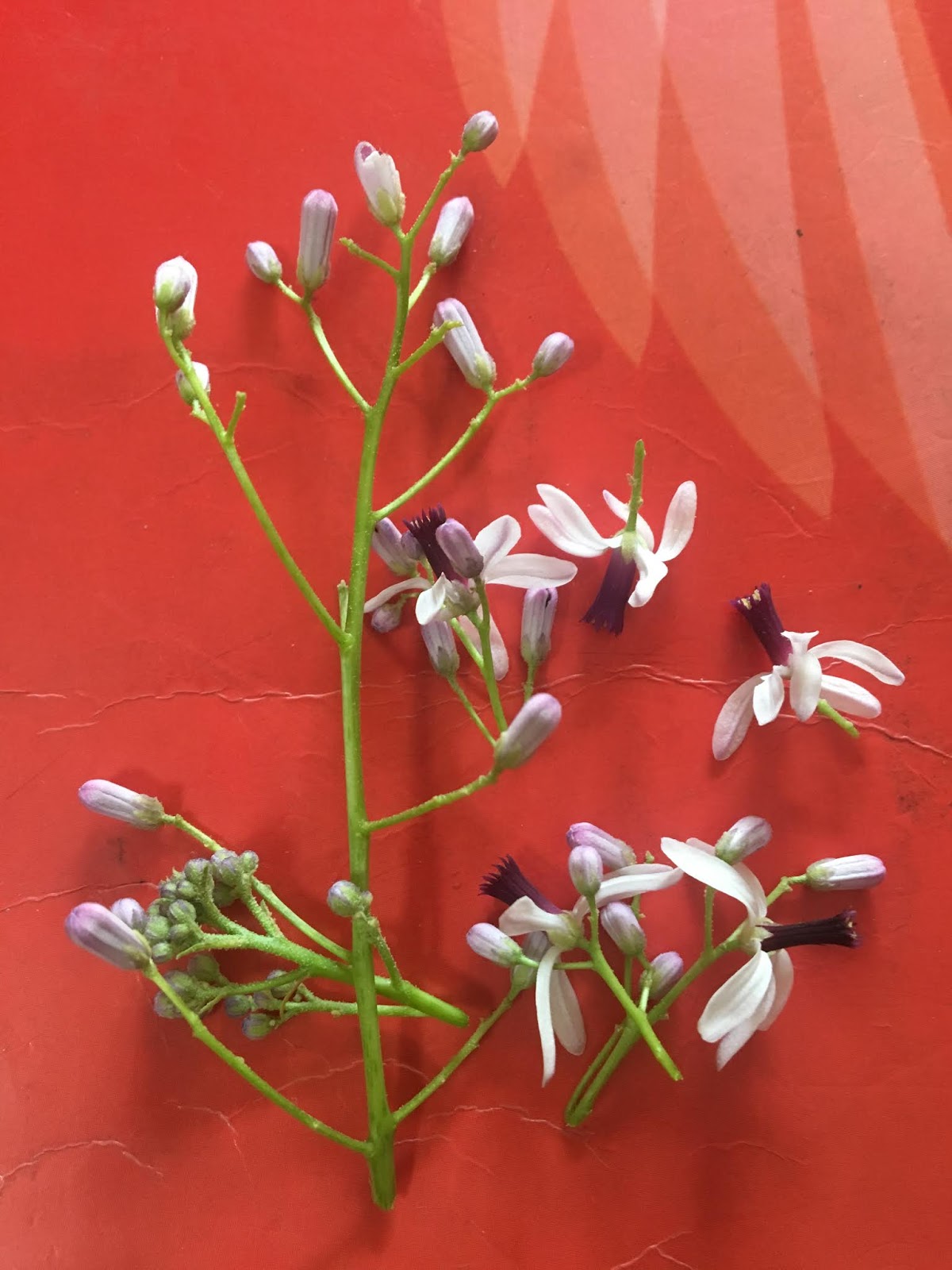
Neem flowers though bitter add aroma and taste to the chutney. Delicate little neem flowers have mere wisps for petals which come apart as you pick them. Since neem flowers are difficult to get as we wish, they can be sun dried and stored in an air tight container to use later. If you have lots of dried neem flowers, they can be  fried in ghee and sprinkled over sambar, dals, veg subjis or any veg dish for a delicious taste and aroma.

You Need

1 tbsp urad dal
1 tbsp chana dal
1 tbsp coconut scrapings
2 tbsp dried neem flowers
2 dry red chillies
Marble sized ball tamrind
¼ tsp asafetida
½ tsp jiggery (optional, but tastes good)
1 tbsp oil (or less)
Salt to taste


ü Heat a thick bottomed pan and dry roast neem flowers over a low heat so nut to burn them. When you get a nice smell, transfer them to the mixie jar.
ü Heat oil in the same  pan and roast   the dals one by one till they turn into golden colour. If you burn the dals they may taste bitter.
ü Finally fry the dry chillies. As you put off the stove, add asafetida .
ü When the fried items are cooled, grind them along with coconut, salt and jiggery adding little water as required.
ü When the paste is coarse, put off the mixie, check the taste and serve with Idli/dosa/chapathy or rice.


Wednesday, 20 June 2018

SALTED RAW MANGO for later use


Raw Mango in Brine/Kolache Ambe


2 big raw mangoes (around ½ kg)
3 cups water
4 tablespoons table salt
3 green chilies washed and dried
2 big glass bottles, washed and sun dried for a day or two


·         Take a clean vessel, pour water and bring it to boil. Add salt and boil in low heat for 10 minutes. Put off the heat and allow it to cool. (brine)
·         Wash the mangoes well and dry them. Cut off the stalk and wipe off the sap if you find any.
·         Cut the mango in to strips and discard the seed.
·         Cut the chilies in to 4s.


·         Take a bottle and place the cut mango pieces in the bottles slightly more than half. In between put the cut chili pies.
·         Pour the boiled and cooled salt water in the bottle till the mango pieces are immersed in the brine.
·         Put the rest of the mango and chili pieces in the second bottle, pour the brine water.
·         Make sure that the level of salt solution is higher than the mango pieces.
·         Close the lid. It is better to secure the lid with clean cotton cloth. Place the bottles in a dry, cool place.
·         Use a clean, dry spoon to take out the mango pieces after a few days.


Tips
Ø  A bit of more or less of water and salt will not change the taste. However, it is better to finish all the other cooking when you start this work. Cleanliness is very important, lest the entire mangoes may spoil.
Ø  Mangoes cut into small pieces, so that the bottle can hold more of mango.
Ø  The mango bottles may be kept in the fried for a longer life.


Tuesday, 19 June 2018

Rice Rawa Mutli/ Dumplings /Pundi


Rice Rawa Mutli/Dumplings/Pundi


There was a time when Mutli/Pundis were prepared by grinding soaked red rice and salt in hand grinder. Unless the batter is thick, the mutlis could not be shaped and water was added sparing while grinding. The mutli batter was not cooked first to shape mutlis then. Now that the usage of hand grinder is almost found nowhere, this rice rava mutlis taste best.


What you need:


1 cup rice rava (coarse powder)
2 tbsp grated coconut
2 and ¼ cups water
2 green chilies cut into 4s
1 medium onion minced
1 sprig of curry leaves cut finely
1 tbsp chopped coriander leaves (optional)
1 tsp oil
1 tsp salt (adjust to taste)


Recipe:


  • ·        Heat a heavy bottomed or nonstick pan, add oil. When it is hot add onions, chilies and curry leaves one by one. Stir for a minute or two. Add the water and bring to boil.
  • ·        When the water starts boiling add salt, coconut and coriander leaves.  Slowly start adding rice rava stirring continuously. See that no lumps are formed.


  • ·        Put off the heat. Take a big plate. Keep putting a big spoonful of above mixture in the plate.
  • ·        Wet your palm with water and shape each spoonful of above mixture into a round shape, make a hole in between and place it in the idli steamer.
  • ·        Repeat till all the rava mixture gets over. Close the lid and steam for 5-6 minutes. Can make 8-10 medium mutlis.


·         

  • .             Open the lid, insert a knife to check whether the multis are done. If the knife comes out clean, put off the stove and keep the lid slightly ajar to escape the steam.
·        Serve with hot coffee (and chutney if you prefer)

Tips

  1. *     Mutlis can be cooked without seasoning. If you are short of time add everything to the boiling water and proceed.
  2. *     Can skip coconut and coriander leaves, if the mutlis are served with chutney.
  3. *     If mutlies are served with chicken/mutton curry, not need to add onion, chilies. Just add coconut (optional) and salt to water and proceed.
  4. *     Can enhance the taste by adding a little sugar.
  5. *     Always use a long and strong ladle/wooden spoon while stirring the mixture.
  6. *     It is always best to keep the steamer ready before you start cooking rava. Instead of idli steamer, you can steam them in cooker, without the whistle for ten minutes (after the steam escapes freely out of cooker, lower the heat to medium and put off after ten minutes).

You may also like to try

Vanilla Custard 
 one pot meal Methi Pulao or Carrot Rice
 Paneer / Baby Corn Masala
KOKUM/ BINDA/ PUNARPULI RASAM great to health
Home made twistato
Vanilla Custard
KOKUM/ BINDA/ PUNARPULI RASAM
 KOKUM/ BINDA/ PUNARPULI JUICE  
Peanut/groundnut special
Ragi balls in micro wave
Bafat powder - spice mix
Jackfruit dosa

You may like to try:

Pork Ribs

 PORK RIBS These barbecue pork ribs are so delicious that it’ll become a family favourite dish in no time ! Go ahead and try this recipe ! ...